AI-Generated Logos and Marketing Content: Two Risks Founders Should Plan For
AI can accelerate your business, but do you own what it creates? Know the risks before you publish.
Artificial intelligence (AI) has become a defining business buzzword of the mid-2020s. Tools that can help draft text, generate images, and accelerate routine tasks are now marketed everywhere. Founders and operators often hear about platforms like ChatGPT, Gemini, Midjourney, and others as ways to move faster with fewer resources.
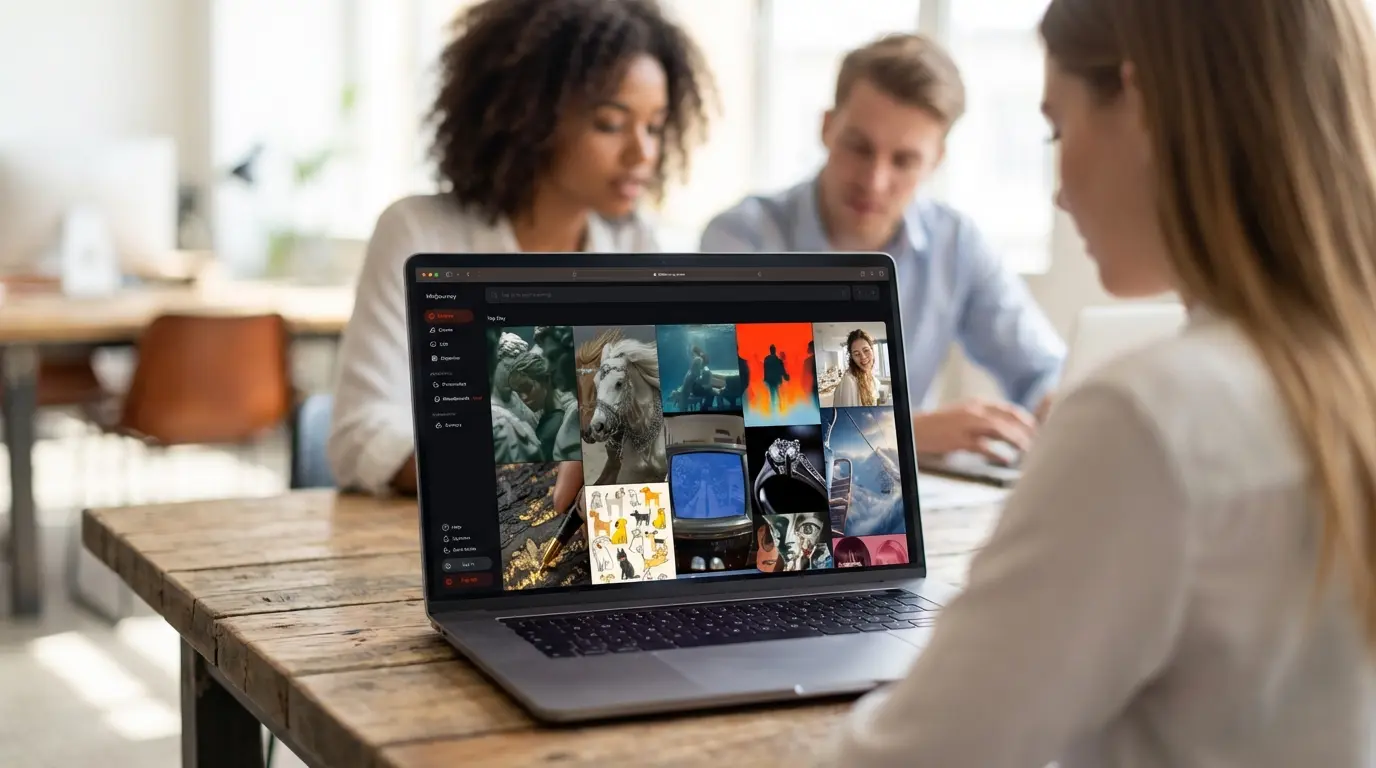
One of the most common suggested uses for AI in business is content creation and design. Need a logo concept? Have AI generate options. Need images for an advertisement (or even a video)? AI can help you prototype quickly.
AI can be a real accelerator - but for customer-facing creative, two risks are often overlooked: (1) audience and brand perception and (2) whether you can own and protect the output.
TL;DR
- Treat AI output as a starting point; ensure there is human review and editing before publishing.
- Expect some audiences to react negatively to obvious AI aesthetics; test creative with your market.
- In the U.S., purely AI-generated material may not qualify for copyright protection.
- Prompts alone are typically not enough; consider trademarks and contracts for brand assets.
The AI Effect
The first issue is what we call the "AI Effect" - a particular look to art, cadence to writing, or flow to video content that signals to an audience that a machine made it. Sometimes these indicators are subtle (for example, overly uniform textures in skin or clothing). Other times they are obvious, like inconsistent hands, unnatural features, or impossible details.
Errors involving specialized knowledge and details are often telltale indicators of artificiality. For example, an AI-generated picture of a military veteran might show decorations and medals in the wrong order. Or an AI-written account of a scientific experiment might get key details or processes wrong. Often, most folks will not notice - but those with specialized knowledge will.
Public reactions to AI-generated content are mixed. Some people refuse to engage with content they discover was made with AI, especially when there is little human involvement. Others may enjoy AI personally but dislike commercial uses. Ethical, environmental, and labor concerns can also influence reactions.
What does that mean for businesses and individuals seeking to use AI? It means increased risk. If your target audience is especially antagonistic toward AI use, they may decide your products or services are not for them. Even if they only find "excessive" AI use distasteful, it can be hard to predict what goes too far. For example, McDonald's Netherlands rolled out an AI-generated Christmas ad in late 2025 and pulled it after online criticism.
So, using AI to generate creative content carries a risk of alienation. But even if your market is enthusiastic about AI, there is another issue to plan for: ownership and protection.
Ownership of AI Content
The law around AI content and the models used to produce it is still developing. Courts and legislatures around the world are debating what is legal and permissible. In the United States, a practical question for founders is: if you use AI to make something, do you own it in a way that lets you stop others from copying it?
Intellectual property protections generally vest in humans, not machines. If a human designer creates your corporate logo, you can use contracts to ensure rights transfer to your company (and employees' work is often owned by the business under work-made-for-hire rules). With AI-generated output, the analysis can be different - and you may need to rely more heavily on trademark, contracts, and process documentation.
Different jurisdictions are approaching the issue in different ways. In the U.S., the U.S. Copyright Office has released guidance on when works that include AI-generated material may be protected. For business teams, the key points are:
Point 1. The use of AI tools to assist rather than stand in for human creativity does not affect the availability of copyright protection for the output.
This means you do not automatically lose protection just by using AI as part of the process.
Point 2. Copyright protects the original expression in a work created by a human author, even if the work also includes AI-generated material.
Human-created portions of a work can still be protected even if AI is involved.
Point 3. Copyright does not extend to purely AI-generated material, or material where there is insufficient human control over the expressive elements.
In other words, if there is not enough human authorship, copyright may not protect the AI-generated portions.
Point 4. Whether human contributions to AI-generated outputs are sufficient to constitute authorship must be analyzed on a case-by-case basis.
There is no one-size-fits-all checklist. Disputes over ownership or protectability can be expensive because they often require a fact-specific analysis.
Point 5. Based on the functioning of current generally available technology, prompts do not alone provide sufficient control.
Prompts by themselves are typically not enough. If brand assets matter to your business, plan for additional human creative work (editing, selecting, combining, and refining) and keep records that show that human contribution.
What does this mean for a logo, illustration, or campaign asset? If it is determined that the output is purely (or mostly) AI-generated, copyright may not be a reliable enforcement tool. That does not mean you have no protection: trademarks are often the primary protection for logos and brand identifiers, and contracts (including vendor agreements and platform terms) can allocate rights and licenses.
So, in Closing…
AI is not an automatic "do it for you" solution. Using it for customer-facing content - logos, ads, product design, and similar assets - can create both market risk (how customers react) and legal risk (whether you can own and protect what you built).
Practical next steps:
- Use AI for early exploration, but consider a human designer for the final logo/brand system you will build around.
- Treat AI output as a draft: review for accuracy, quality, and brand fit; fix obvious AI artifacts before publishing.
- Document your process (drafts, prompts, edits, selection decisions) in case you ever need to show human authorship.
- For names and logos, prioritize trademark clearance and filing early.
- Review AI tool terms and vendor contracts for ownership, licensing, confidentiality, and commercial-use restrictions.
(This post is for informational purposes only and is not legal advice. Specific outcomes depend on facts and jurisdiction.)